Political climate of the nearest ally of Mithrin and Taurdain int he aftermath of the Harvester War
In the ragged wake of the Harvester War, Auris, once a bastion of reason and religious tolerance amid the fractured Allied Nations, now teeters on the edge of upheaval. The war may have ended, but its embers burn hot beneath the surface, and nowhere are they more volatile than in the royal court of Lady Gavashoon, the widowed queen who now rules in the name of a monarchy many fear is nearing its twilight.
The scars of battle have not healed cleanly. Refugees stream in from Taurdain, whose own lands lie cursed and cracked under the weight of divine wrath, and from the borderlands of Mithrin, now facing their own internal rifts. These masses—broken, hungry, frightened—bring with them tales of fire, falling stars, and the madness that followed. The people of Auris, long proud of their secular monarchy, watch with growing dread as their own borders swell with the displaced.
But the true storm brews not in the streets, but behind the gilded doors of Auris’s high temples and stone-walled sanctuaries. The High Chancellor of the Church of the Three Pillars, a figure robed in tradition and veiled in ambition, has rallied the full weight of the theocracy against Lady Gavashoon. His sermons speak not just of divine punishment and purity, but of “restoring sacred order”—a thinly veiled call to dismantle the monarchy and return the nation to clerical rule.
The church’s coffers overflow from generations of tithes and the spoils of wartime opportunism. Its cathedrals are fortified, its banners visible in rural townships and the slums of the capital alike. Even the noble families, once unified under the crown, are beginning to fracture—some drawn to the familiar authority of the Church, others clinging to the Queen as the last symbol of continuity and order.
Yet, Gavashoon is no passive widow. Though her husband’s death left her bereft of dynastic power, her control of the military remains ironclad. The Royal Guard answers to her alone, and the army, blooded and bitter from the Harvester War, still flies her colors. Veterans owe her their pensions, and officers respect her wartime diplomacy with Taurdain and Mithrin. This martial allegiance is her shield against the clerical dagger.
Still, her position is growing more tenuous by the week. The alliances with Taurdain and Mithrin, once the cornerstone of Auris’s strategic strength, have frayed under the pressure of the refugee crisis. Even as both nations accept those fleeing disaster, the flow of displaced persons back into Auris has made it a crucible of conflicting cultures, desperation, and trauma.
The High Chancellor has seized on this chaos, calling Gavashoon’s compassion weakness, her open doors a threat to divine purity. He preaches of a “Second Purging,” invoking ancient tales of fire-born renewal and martyrdom, stirring the old blood of zealots long silenced under the crown. Demagogues and populists bloom in the confusion like mold in the dark—some claiming divine visions, others inciting street violence under banners of ancestral faith.
In taverns and temples, in market squares and shadowed manors, whispers of civil war are no longer far-fetched fantasy. Armed militias calling themselves the “Faithbound” patrol parts of the countryside, while Gavashoon’s spies root out conspiracies among minor nobles and merchant guilds.
The queen walks a razor’s edge, every word she speaks weighed not just by her court, but by the oracles and inquisitors who now watch her from the margins of power. She governs still—but every edict, every mercy, every refusal to bow to the clergy’s will tightens the noose of religious revolt.
Auris is not yet lost, but it has become a kingdom of quiet siege. Gavashoon’s crown gleams, but it does so above a pit of waiting wolves.
Auris in Ash and Ashes
The aftermath of the Harvester War did not bring peace—it scattered the seeds of unrest across every border, and now they bloom into turmoil.
Auris, once proud in its stability and secular crown, now finds its throne cracking beneath the weight of faith, fear, and foreign eyes. Lady Gavashoon, queen by widowhood and ruler by sheer force of will, presides over a realm unraveling at the seams. The people respect her; the military obeys her. But the Church of the Three Pillars, long a quiet power beneath the court’s velvet trappings, now roars with sanctified fury.
At its head stands High Chancellor Vauran Thael, a zealot cloaked in tradition and draped in the wealth of a thousand temples. He calls for the return to theocracy, branding the monarchy a failed relic of indulgence and compromise. His sermons blame Gavashoon’s compassion for the influx of refugees and the spiritual “dilution” of Auris. But behind his silver tongue lies the hungry will of a conqueror—and his eyes burn not just for Auris, but for a divinely ordained dominion.
The alliances with Taurdain and Mithrin, once Auris’s greatest source of strength, have been strained by the weight of shared misfortune. Taurdain, ravaged by divine retribution and a crumbling monarchy of its own, bleeds refugees into the countryside. Mithrin, harboring its own wounds, offers some sanctuary—but its patience thins. While Gavashoon opens her gates to the desperate, Vauran whispers that compassion invites damnation, and paints the queen’s mercy as betrayal.
The Dragon Queen’s Rising Shadow
Few have ever seen the Dragon Queen and no one is known to have seen her true form.
Yet the most dire threats may not wear the vestments of a priest.
Far beyond the southern sea routes, across the deep waters where Innarlith’s winds swell and old magic whispers in coral grottos, the Dragon Queen watches. Her islands—rich in volcanic peaks and verdant jungle—are populated by long-lived elven highbloods and isolationist halfbreeds, remnants of an ancient empire that once challenged the divine. For decades they have withdrawn from continental affairs, trading only rarely, never revealing their numbers or full strength.
But now, the Dragon Queen covets Taurdain.
Whispers drift in with the sea fog: her agents scout the broken coastlines, her priests speak of long-lost pacts, and her fleets—ostensibly patrolling against piracy—have grown in number and aggression. Sails bearing the glyph of the Burning Coil have been spotted off Auris and Mithrin, more than once accompanied by war galleons rarely seen outside full military engagements. Officially, she offers aid to fleeing Taurdain nobility—but many suspect she waits only for the right moment to claim their fractured lands for herself.
Should Auris fall into civil war, the Dragon Queen’s gaze will turn hungry and sharp. An island empire with limited room for growth and centuries of martial training has every reason to pounce on a divided kingdom. The priests of the Seven Pillars call her a demoness in elven skin; the court calls her a ghost of history. But Kraglann, madman, warlock, and builder of horrors aboard The Hag, knows better.
“She will come,” he has said. “And she will bring the first fire, not the last.”
Dismissed by many as a raving lunatic, Kraglann’s warnings are still heeded in the dark hours of strategic council. His knowledge of Innarlith comes from painful service beneath her banners, and while his hate makes him dangerous, it also lends him clarity. He urges Gavashoon to strike first, to test the Queen’s coastal defenses or seize a forward island. But others fear such provocation would be the very match that ignites a new war.
The Gathering Storm
In the cities of Auris, unrest simmers. The Faithbound, militant arms of the theocracy, march openly in rural towns. Merchant princes jockey for favor with whichever faction may preserve their fortunes. Refugee camps swell into uncontrolled slums. Border fortresses go unanswered by the capital. The queen’s council grows silent in her presence, and her generals speak more often in war rooms than in court.
Every day, Lady Gavashoon grows more isolated, her crown lighter, her decisions heavier. And still she holds the line—against priest, pirate, and foreign queen alike.
Auris is a candle in a hurricane, its flame flickering.
And in the winds, a voice whispers—low, ancient, and greedy:
“Let it fall, and I shall rise.”
Lady Gavashoon, Widow-Queen of Auris
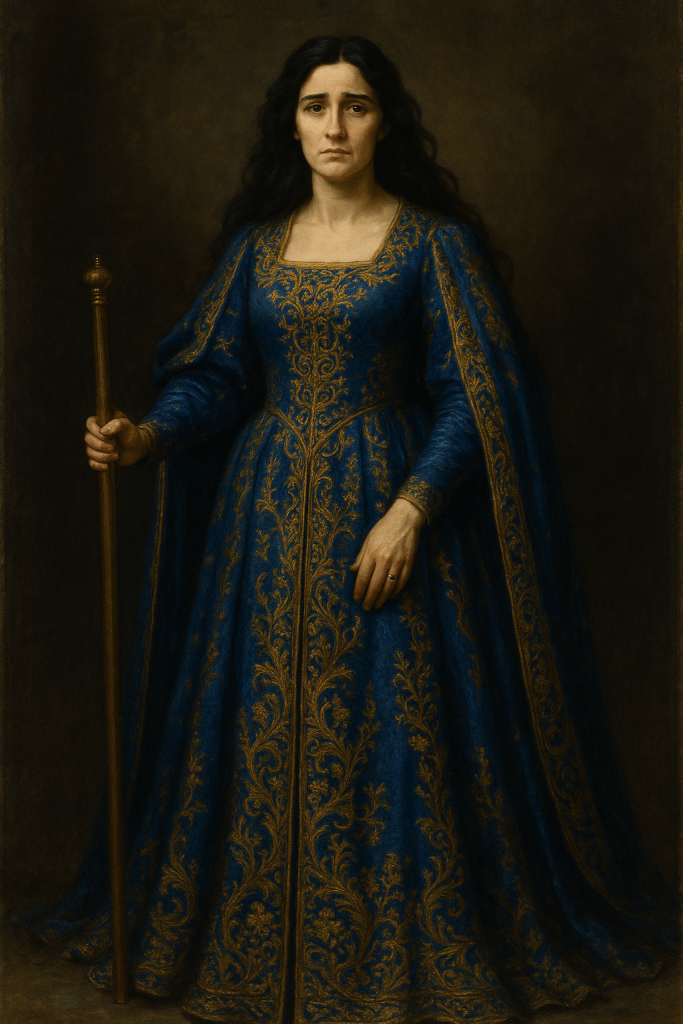
Once known for her gentle diplomacy and sharp intellect, Lady Gavashoon has become a reluctant symbol of resilience and sorrow in a kingdom plagued by spiritual fanaticism and political decay. The daughter of a merchant-lord from the northern wine provinces, she was never meant for the throne—but her marriage to King Alric brought her into the heart of the Aurian court. His death during the Harvester War, under mysterious divine circumstances, left her regent in all but name.
She is not a warrior, nor a mystic. She governs with precision and patience, balancing alliances, commanding the loyalty of the army, and staving off collapse with speeches woven from dignity and reason. But she is alone. Her court is riddled with spies and fence-sitters. Her only true power lies in the loyalty of the military—a blade that grows dull the longer it’s sheathed against internal revolt.
Though adored by the commonfolk for her open doors and visible compassion, her greatest enemies wear robes of gold and speak with the voices of gods. She walks a perilous path, one misstep away from martyrdom or exile.
Symbols: A mourning veil pinned with a silver eagle; letters penned in her own hand to refugee children.
Rumors: Keeps a journal addressed to her dead husband. Refuses to remarry, even for alliance. Secretly meets with Kraglann under guard.
High Chancellor Vauran Thael, Voice of the Three Pillars
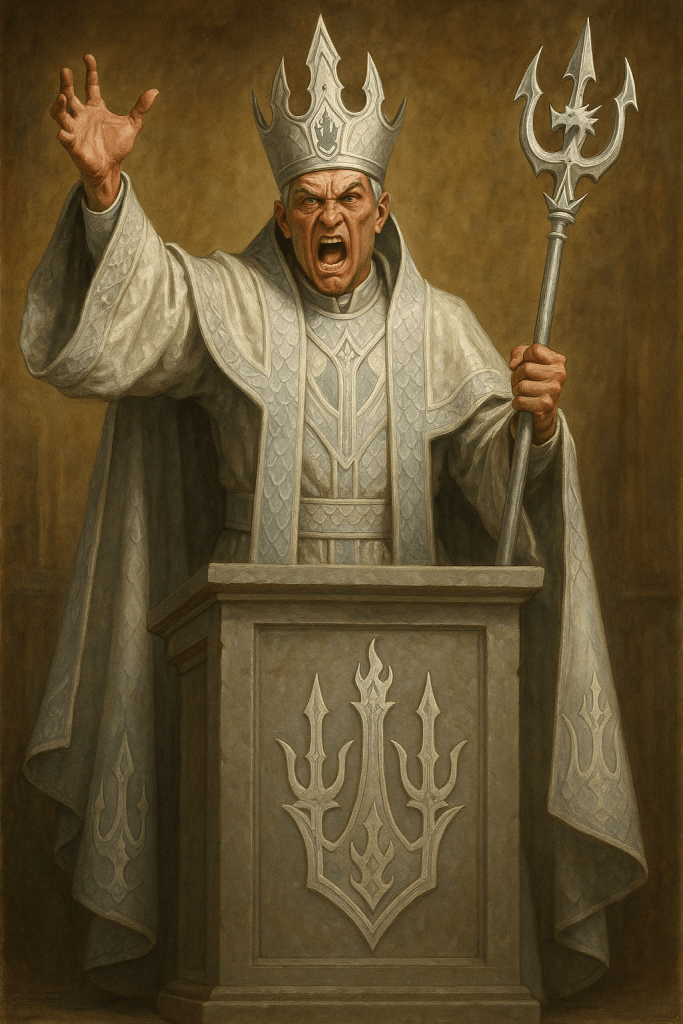
Where Gavashoon leads with empathy, Vauran Thael commands with conviction. A man of striking presence and implacable belief, the High Chancellor is both a spiritual leader and a political juggernaut. He speaks not just for the Church of the Three Pillars, but for the ancient dream of divine rule—a return to when Auris was a Sanctified Dominion, ruled by clergy who served the will of the gods, untainted by mortal vanity.
His sermons are masterpieces of guilt and grandeur. He speaks of divine inheritance, of purity stolen by secular pride, of a nation that must bleed to be reborn. Though he claims peace, his actions trail fire: the Faithbound rise at his call, inquisitors appear where the queen’s influence falters, and offerings to the Pillars grow in both gold and blood.
Vauran sees Gavashoon as a usurper—a merchant’s daughter who dallied with kings and now courts damnation by sheltering the spiritually unclean. His power grows daily, fed by desperation, divine fear, and the vast wealth of the faithful. He is not just a priest—he is a general in waiting, and his holy war may soon be more than metaphor.
Symbols: A pendant carved from an ancient dragonbone reliquary, always warm to the touch.
Rumors: May possess relics from the Harvester War that show divine sanction. Claims to have spoken with a fallen angel during his youth.
Kraglann the Bound, Warlock of the Hag
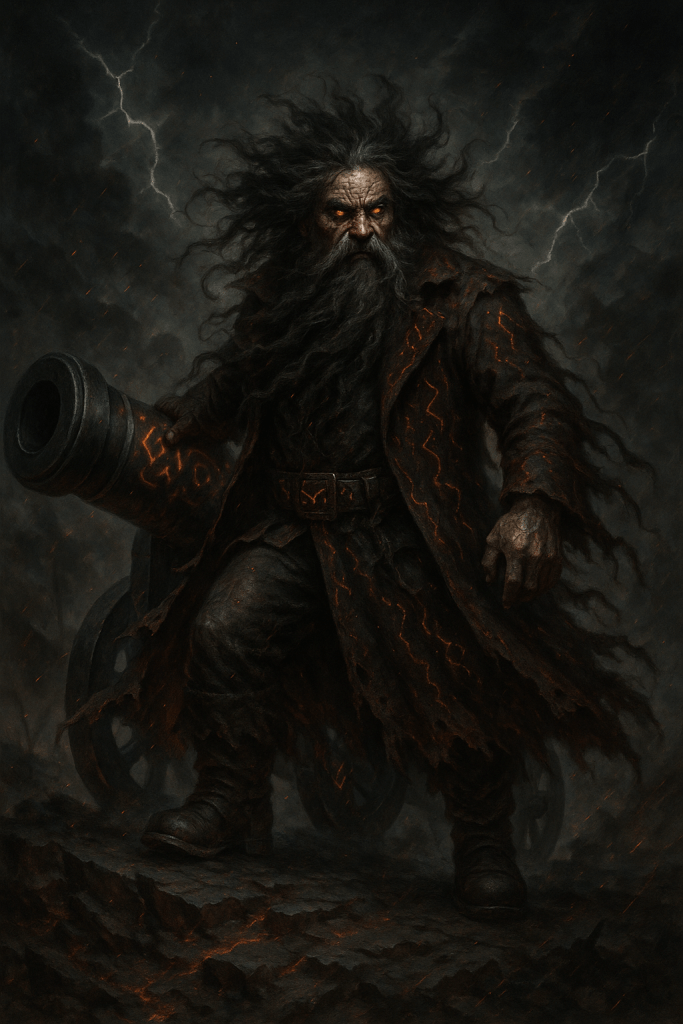
To the public, Kraglann is a terror, a dwarven freak whispered to be half-mad and wholly damned. His voice is coarse with soot, his eyes rimmed with fire-black veins. But beneath the scars and brimstone breath lies a mind sharper than most courts can claim.
Once taken in chains to the Dragon Queen’s inner sanctum, Kraglann was subjected to rites older than Auris itself. Through ritual branding, bloodletting, and exposure to otherworldly forces, he was broken and rebuilt—his body made conduit, his soul chained to a forgotten entity the Queen could not fully control. When he escaped, it was aboard The Hag, a dreadnought powered by infernal combustion and arcane fury—his vengeance made vessel.
He despises the Dragon Queen with a hatred that borders on religious. But it is not blind rage. He understands her. Fears her. Obsessively tracks her fleet movements, studies the shifts in Innarlithian coastal glyphs, decodes intercepted orders.
His counsel to Gavashoon is simple:
“Strike now, before the stars align. Wait, and she’ll come in glory and bone.”
But Kraglann is dangerous. The darkness he carries whispers for war, for fire, for blood. His devices frighten even loyal soldiers, and his very presence strains the queen’s credibility. Yet she cannot afford to lose him—he knows too much, and might be the only one who truly understands what looms just beyond the horizon.
Symbols: His iron-bound spellbook burns the name of anyone who opens it. His staff is forged from a cannon barrel and inlaid with bone sigils.
Rumors: Speaks in his sleep with a second voice. Keeps the heart of a dragonspawn in a vault beneath The Hag, preserved in black fire.
The Dragon Queen of Innarlith
There is a painting that is rumored to be her in Mithrin shown below

She walks in flesh, but she is not flesh. Her skin gleams like sunlit copper. Her voice carries the tremor of thunder trapped beneath mountains. The Dragon Queen, ruler of the volcanic Isles of Innarlith, is no mere monarch. She is a true dragon—ancient, imperious, and burdened with the memory of empires that the world has long forgotten.
Once known as Veltharaxis the Seventh Flame, she has shed that name like a serpent discards skin, taking on the mantle of Queen of Ash and Ember, hiding her form behind the veil of a statuesque elf-woman clad in flame-threaded robes and molten gold. She is immortal not through magic or artifice, but because her very blood resists death’s call. The elves and half-bloods of her court, long-lived and rigidly caste-bound, serve her not merely out of loyalty—but awe. To them, she is the last remnant of the old divine order, when dragons ruled by right and mortals bent the knee or burned.
With the death of Lord Blue, a fellow draconic sovereign and ancient rival slain in the final spasms of the Harvester War, the Dragon Queen proclaims that Taurdain’s sovereignty now falls to her by draconic rite. In her mind, the island is not a nation but an orphaned hoard, unclaimed, waiting to be returned to its rightful matriarch. Her claim is both symbolic and literal—a declaration that the age of dragons is not over, only paused.
Her court is silent on this claim, but her fleets speak louder. Innarlithian warships drift ever closer to the southern shores of Taurdain and the outlying trade routes near Mithrin and Auris. These ships are no longer just watchers—they are wargalleons, bristling with alchemical flame-throwers and ballistae rigged to fire harpoons of smoldering glass.
But one soul stands as a barrier to her ascension. Kraglann—the mad dwarf warlock, her once-prized prisoner—knows her true name. The name she wore in the First Age, when dragons still spoke with the stars and ruled not from thrones, but from mountaintops. If spoken in the right tongue, with the right sigils, her name would shatter her glamour, unravel her protections, and mark her for celestial judgment. For this, she hates Kraglann with a fury hotter than the magma rivers of her home.
And Kraglann returns that hatred tenfold.
He was meant to be her linchpin, her secret weapon. Into him she bound the Titan of Annihilation, an ancient soul-construct of unmaking—an infernal power from the lost continent of Vhal-Turh that she had dredged from myth and imprisoned in the dwarf’s spirit through dark rites. He was to be her hammer, her god-machine, the first of many weapons to reclaim the mainland in a second Draconic Era.
But he escaped.
Now he wields that titan’s power against her. And should he ever speak her name beneath the right moon, she knows even her long, long life might finally end.
Symbols: A trifold crown of red gold with three flame-cut sapphires. The claw-marked standard of the Ember Throne, which no mortal may carry.
Rumors: Sleeps coiled in a vault of obsidian beneath her palace, wrapped around the egg of her unborn heir. Has not shed her scales in three centuries. Seeks to bind a second Titan—this one of Storms.
 Shermans fantasy world